Theoritical Basis
NEO-HUMANISM:
The scope of humanism is limited to human interests. It does not consider the interests of animals, birds,
plants, and the inanimate world. By expanding the scope of human emotionality, neo-humanism encompasses all
beings, animate and inanimate, because the entire universe is a manifestation of the Supreme Consciousness.
NEO-ETHICS:
Neo-ethics should be the foundation of socio-economic and political relations. This means that the interests
of human society must be considered alongside the interests of animals and the environment, because maintaining
ecological balance has existential value for all. Similarly, cardinal human values should be prioritized over
social and human values.
COSMIC INHERITANCE:
The universe is a manifestation of the Supreme Consciousness. Human is not its creator, therefore, human
society has the right only to appropriately utilize created things, not to own them.
UNITY IN DIVERSITY:
Human society is one and indivisible. There are no fundamental differences between human beings. Differences
in culture, race, gender, caste, status, and rich-poor are external. Similarly, human culture is one. Variations
in its expression are evident due to changes in time, place, and place.
CO-ORDINATED COOPERATION:
The basis of social relations should be co-ordinate cooperation, not subordinate cooperation. Co-ordinate
cooperation means working as equals with mutual respect and with a sense of mutual benefit.
PROUT:
"PROUT" is short for Progressive Utilization Theory. It is a socioeconomic theory. It has five fundamental
elements:
1.No person should be allowed to accumulate any kind of material wealth without the permission or consent of
the society.
2.There should be maximum utilization and judicious distribution of all the physical, metaphysical and
spiritual wealth of the world.
3.There should be maximum use of the individual and collective physical, mental and spiritual assets of
human society.
4.There should be harmony between all these physical, metaphysical, physical, mental and spiritual uses.
5.The method of use should change according to the changes in place, time and character and it should always
be of progressive nature.
Socio-Economic Principle
Economic democracy
Economic democracy means that the power to decide and implement all economic policies should be in the hands
of local people. This is possible only when economic power is completely decentralized.
The following
elements are essential for economic democracy:-
1.The economic system should be such that it meets the minimum needs of every individual (food, clothing,
housing, education, and medical care). The resources and related industries that meet these needs should be
operated by local people. Local people mean those who have aligned their socio-economic interests with the
socio-economic interests of the unit.
2.Raw materials should be used for the overall development of the local region and should not be allowed
to leave the local region. Industries based on available raw materials should also be established within
these economic units and operated by cooperative organizations.
3.Only local people should be employed in enterprises. Outsiders should not have the right to interfere
in the economic activities of that area.
4.The purpose of production should be utility, not profit. There should be no restrictions on the
movement of goods produced in the region to local markets for sale.
5.Production and distribution should be conducted by cooperative institutions.
6.All types of agricultural products and agriculture-based industries should be established according to
the needs of the local population. These industries should be governed, regulated, and policy-making by
cooperative organizations.
7.Only goods produced in that area should be sold in local markets.
Industrial Policy:
After solving the problem of income distribution, the methods of generating that income should be considered.
Prout's industrial policy incorporated prudent economic equality as a fundamental part of economic policy.
This should have three categories:
1. Key Industries
Core industries should include those that supply raw materials for cooperative industries, such as energy,
steel, defense materials, fertilizers, oil, gas, minerals, cement, coal, machine tools, heavy engineering,
petrochemicals, etc. These industries should be operated by local governments. These government-owned industries
should operate on a "no profit, no loss" basis.
2. Cooperative Industries
This category includes all major industries and services, including agriculture. These should be managed by
cooperative societies.
3. Private Enterprises
This category should include consumer goods, agricultural products, and services that cannot be managed by
cooperative societies. These should be managed by individuals or small partnership cooperatives.Such as
refreshment shops, small grocery or general merchandise shops, tailors, barbers, laundry, auto repairs, lawyers,
doctors etc.
Agriculture Policy:
Agriculture should be given the status of an industry. Responsibility should be assumed for providing farmers
with water and good seeds, either free of charge or at nominal prices. Farmers should be encouraged to use
green manure instead of fertilizer. Unprofitable land holdings should be brought under cooperatives. Only by
establishing agriculture-based industries can agriculture be given the status of an industry.
Self-sufficient Socio Economic Unit
A decentralized economy is essential for economic democracy. To achieve this objective, it is essential to
create self-reliant economic units based on common economic capacity, common economic problems, common
geographical conditions, and common emotional heritage. With this in mind, 44 economic units have been
created in India. The approach to creating these units will be regional, but the spirit will be universal.
In other words, their foundation will be universal principles, but there will be provisions for adapting to
changes in time, place, and place. Various socio-economic units will coalesce and expand, becoming larger
and more diverse in the appropriate environment. As a result, one day all of South Asia may become one
economic unit, but the basic unit of production will remain the block level. By realizing this new form, PSS
aims to realize the globalization of the economy based on economic democracy.
Block level Planning
For the all-round development of the area, the economic unit plan should be made by local experts. This will
be for all three sectors: agriculture-based industry (based on agricultural production) and agricultural
industry (products required for agriculture like seeds, fertilizers, plough, tractor etc.). Implementation
of the above three sectors is possible only through socio-economic education. These industries should be
regulated and operated by cooperatives. This type of planning works from the bottom up and is not imposed
from the top down like nowadays. The block should be determined for a population of approximately one lakh.
Balanced Economy
For a balanced economy, agriculture, industry, and trade must be well-balanced. In a balanced economy, 30-40%
of the population should be engaged in agriculture, 20% in agro-industry, 10% in business, and 10% in wage
earners. In a developed economy, the percentage of people engaged in agriculture, industry, and trade should
be gradually reduced.
There are four main components of a decentralized economy.
General Economy
People's Economy
Commercial Economy
Psycho Economy
Reservation:
Relying on reservations for any class or individual is a sign of flawed economic policy. Once economic democracy
is established through a decentralized economy, there will be no need for reservations. As long as economic
democracy is established,To prevent the dream from becoming a reality, reservation should be given on the
following basis.
First preference– those who are backward both socially and economically.
Second preference- Those who are economically backward but not socially backward.
Third preference– those who are socially backward but not economically backward.
Education Policy
The foundation of education should be "Sa Vidya Ya Vimuktaye," which paves the way for liberation at all three
levels: physical, mental, and spiritual. For liberation in the material realm, education should be provided that
enables people to acquire the purchasing power necessary to meet their minimum needs. Providing for mental
development is also the objective of education. Acquiring knowledge of literature and art, history and
philosophy, psychology and sociology, science and technology is not enough. Human qualities must also be
developed. Free education for everyone at every level will provide equal opportunities for physical and mental
development.
Spiritual development is essential for spiritual pursuit. The responsibility for ensuring proper education
should rest with academics, not politicians. The government should only be responsible for providing the
necessary financial resources.
Science and Technology
Science and technical education should be promoted to the maximum extent possible so that agriculture and
industry can be modernized through scientific research and technological development. This will reduce the
production costs of agricultural and industrial goods.
Foreign Policy:
Economic liberalization should not be used to centralize economic power in the hands of powerful multinational
corporations. Liberalization means dispersing all economic power and wealth among the masses through
cooperation. Economic globalization is a necessity of this era because it is a natural consequence of current
scientific and technological achievements. However, this does not mean globalizing the capitalist economy. Its
true objective should be the globalization of the people's economy. This will only be possible when production
is at the block level and operations are based on cooperation. To produce quality goods using modern technology
and scientific achievements, block-level production, operations, and institutions will be the basic unit of this
type of globalization.
Labour Policy:
All large industries should be managed by workers. Continuous efforts should be made to increase employment
opportunities by reducing working hours and increasing the number of shifts without reducing wages. Providing
employment for everyone is a social responsibility.
Workers should be encouraged to utilize their spare time to cultivate their mental abilities and increase their
work efficiency. The gap between the minimum and maximum pay scales should be gradually reduced so that even
those earning the lowest wages can access more benefits. The gradual narrowing of the gap between the maximum
and minimum wages is a fundamental characteristic of progressive socialism.
Leadership
The leadership of the Proutist Sarva Samaj Samiti will not be like the political platform leadership that
thrives on empty slogans. They must meet the test of morality and dedication to service, and must be physically
healthy, mentally strong, and spiritually advanced. The plan for building such service-oriented, hardworking,
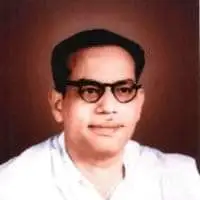
loyal, and ethical leadership has been laid out by the great man, Shri P.R. Sarkar. This leadership will be
committed to implementing the policies of sacrifice, service, and spiritual practice.
The entire living world is one large joint family. This fact should not be forgotten even for a moment.
Nature has not registered even a fraction of the world's wealth in the name of any particular individual.
Individual ownership was created by selfish, opportunistic humans, who exploit the weaknesses of such a
system to enrich themselves. When all the wealth of this universe is the ancestral property of every living
being, can such a system be considered righteous if one's home is a source of abundance while another dies
slowly from starvation?
Each member of a young family receives food, clothing, education, medical care, or rest according to their
appetite or needs, according to the family's financial situation. But if a family member takes on the
responsibility of food, clothing, books, or medicine beyond their own needs, isn't this a burden on the
other family members? In this system, their actions are certainly against religion and against society.
- Shri Prabhatranjan Sarkar